A question for you: what do you think is the percentage of women that suffers from Endometriosis?
1 in 10!
So if it’s not you, chances are that one of your female friends, sister, daughter, mother or colleagues suffers from Endometriosis.
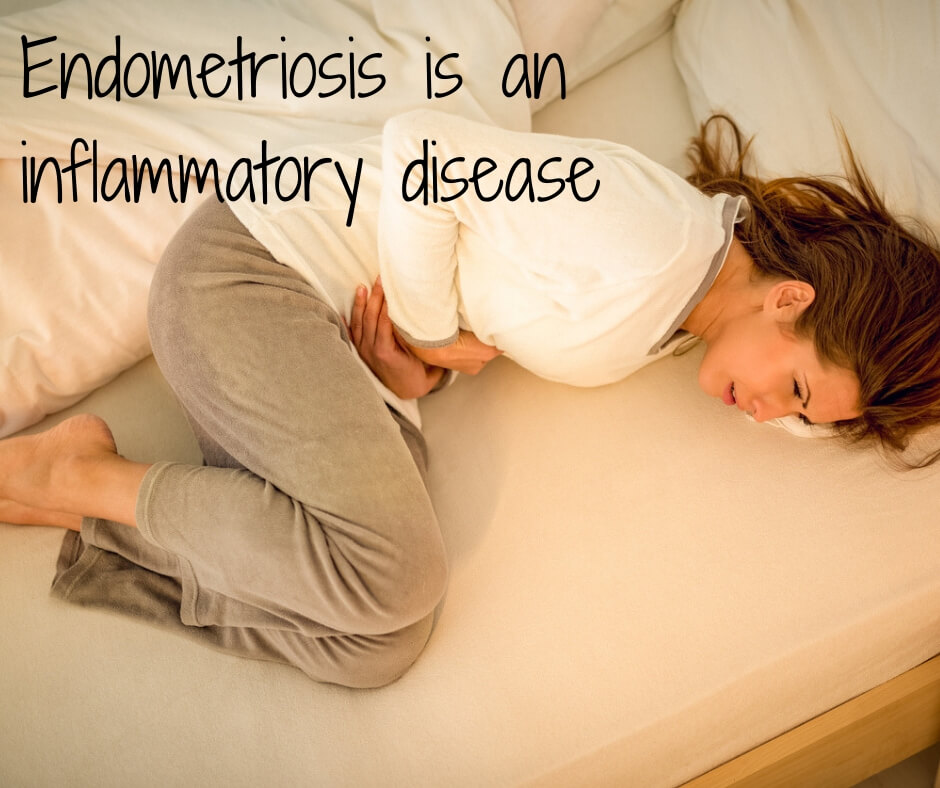
The main symptoms are pain during menstruation; during ovulation, or chronic pelvic pain and unusual bleeding, and it is caused by pieces of the womb lining growing outside the uterus.
It is often missed during diagnosis, and may be mis-diagnosed as PCOS. And when it is diagnosed correctly, it is treated as an hormonal disease. The conventional treatment is to try to shut down oestrogen in your body – with the pill or medication that creates a menopause-like state.
But is Endometriosis an oestrogen problem?
Endometriosis is NOT an hormonal disease. Did you know that it is most similar to Inflammatory Bowel Disease – not any other oestrogen related disease.
This month is Endometriosis Awareness Month and over the coming weeks I will give you some insights into how nutrition can help with Endometriosis.
Are you planning to make some New Year’s Resolutions on 1 January?
Are you finally going to get healthy, fit, lose weight, quit smoking,start cooking, cut out the sugar?
There is something about the start of a new year that makes us think we can make the changes we want or need; it’s the sense of a clean slate, the promise of a whole year where we can do things differently if we choose to. Often despite the fact that we did something similar last year, with the results perhaps not as impressive as we had hoped So, if you want to make New Year resolutions this year, or perhaps specifically decided not to because of your experiences in previous years,this article is for you!
80% of New Year’s resolutions are abandoned by February! I don’t want you to become part of this statistic, so I’m going to give you 4 reasons why your New Year’s resolutions have failed in the past, and give you a few tips to help you stick with them long enough to make a real change and be in the 20% of successful New Year’s Resolutions.
1. The problem with then and now
When you set your New Year’s resolutions, your focus is on the longer term future. If you decided to quit smoking or getting fit, you’ll be imagining running up the stairs without any trouble; cook healthy food everyday; say No to sugar snacks and/or soft drinks..
You imagined the end-state of your resolution. In that beautiful end image, there is no room for the many annoying, difficult, frustrating actions you must take each hour/day/week to get to that end state.We don’t abandon our resolutions because we change our mind about the importance of the end state; we abandon them because we struggle with the journey to get there.
2. You may want to change, but your environment hasn’t
We often don’t realise how much our behaviours are embedded in, and enabled by, our environment. There are triggers in our environment that set off a string of behaviours, often without us realising it. I’ve heard many people who tried to quit smoking complain that the hardest time was at a certain event during the day: first morning coffee; that moment just after dinner. Or you may have decided to stop snacking on biscuits, chocolate or other not so healthy foods at night, but you bought them so you know they are in the cupboard…. I’m not suggesting you blame your environment for not being able to make important behavioural changes! But if you don’t know how our old behaviours are cemented in our environment, you will not succeed in making the changes.
3. What you feel stands in the way of what you think
We are emotional beasts. No matter how much you might like to think you are a rational being, your brain disagrees. To grossly simplify this: our emotional areas in the brain are activated much faster than our rational areas, and as a result we usually ‘decide’ to act based how we feel about a situation than what we think about it. A simple example to illustrate:if you’ve decided to go for an early morning run a few days a week to get fit,and you find you’re hitting the snooze button when the alarm goes off and coming up with very rational sounding arguments why tomorrow would be a much better day to start your running, your actions have been dictated by your emotions!
4. You don’t have the right strategies
As a successful, effective, well-adjusted adult, we are supposed to know how to do things. That’s what we tell ourselves. And you have evidence! There will be many changes you have made successfully in your life; there are many things you are good at that you know others are not. So when you decide to change your behaviour in some new way, you assume you know how to go about it and have the necessary strategies to be successful. But you may not be aware of exactly what strategies you have used in the past and why they worked.Or you may have some excellent strategies for some parts of the process (you’re a great starter of things) but not all of the process (not so good at finishing perhaps?). Or the strategies that you have work for some type of behaviour changes but not for others.
So there you have it: 4 reasons why your very important and worthwhile New Year’s resolutions may have already been abandoned or could be sometime soon. But they don’t have to be! Here are 2 powerful strategies to stop those 4 reasons from derailing you.
1. Start with your environment.
Often it is easier to change your environment so your old behaviour isn’t triggered than it is to fight the triggers. So start by taking a close look at what triggers there may be in your environment that you could change or eliminate. I worked with someone who wanted to start swimming in the evening. Her routine was to get home from work, change into something more comfortable (pyjamas!), and then cook and eat dinner. She was very frustrated that she wasn’t able to motivate herself to then change out of her PJs and in the swimmers and go to the pool! Talk about a powerful trigger not to go. So we worked out a different routine: when she got home she would change into swimmers, then cook and eat dinner. Getting to the pool was a lot easier after that.
2. Small steps, one step at a time.
The end-state image of what your change will result in is absolutely crucial to make the decision to start. But after that, that image is only going to make you feel overwhelmed. It’s always seems so far away, so out of reach. Instead, when you’ve decided on you change, start by asking yourself questions:
On a scale from 1 to 10, with 1 being nowhere near the goal, and 10 being fully achieved the goal, where are you at the moment?
What small actions can you undertake to get yourself to the next number?
Then all you do is focus on those small actions. Small actions usually provoke less strong emotions and are much easier to turn into habits.
Let me work through a scenario for you on this one. Let’s say you want to start making your own healthy lunch each day, and you feel you are at a 3 on the scale at the moment. So how to get to a 4? Perhaps a small action can be to take 10 minutes each Sunday evening to plan what you’re going to have for lunch for the week. Or a small action can be to make a couple of lunches on the weekend and keep them in the fridge ready to take with you.
And when you think you’ve progressed to the next number on the scale, you think about what small actions you can take to get to the next number, and so on.
New Year’s resolutions can work! Make sure you are one of the 20% of people who make them work.
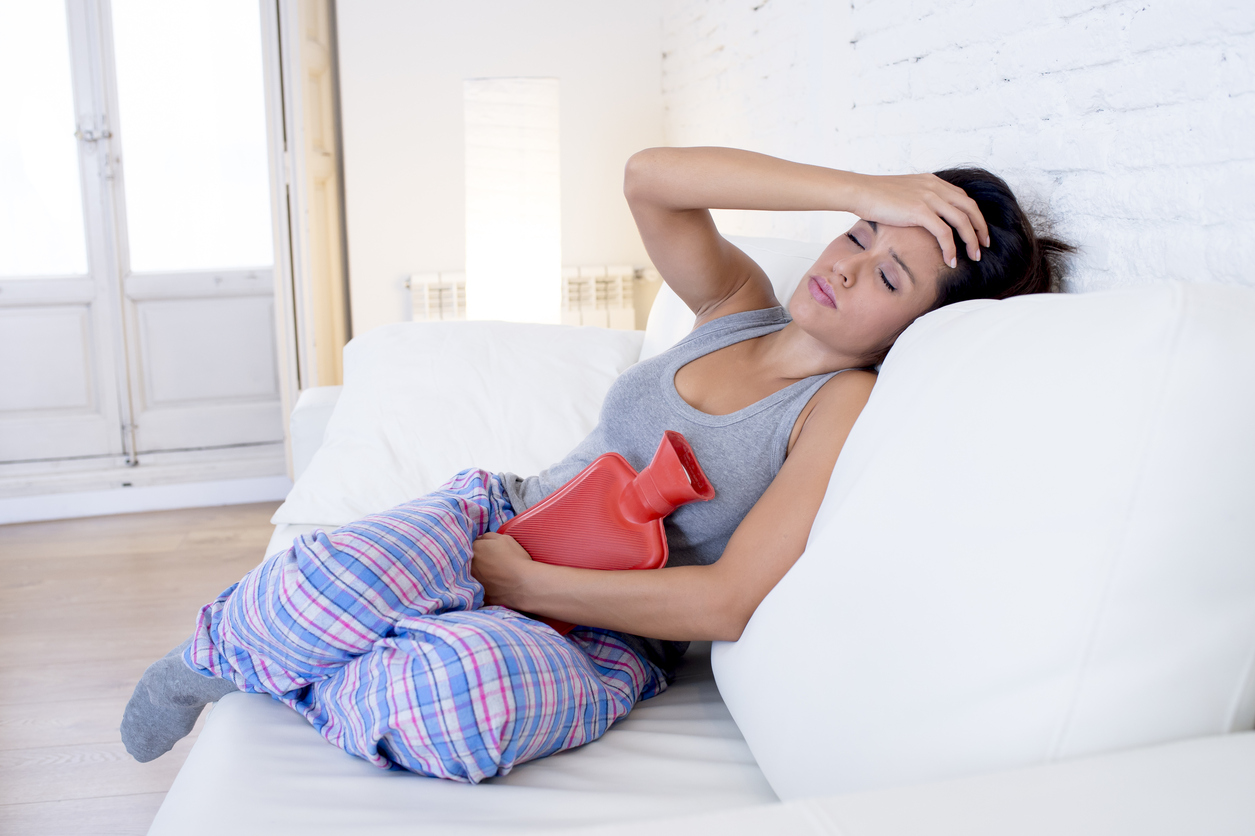
When I still had my period (I’m menopausal now, so that time is fortunately over), my first day used to be horrible. I would get terrible cramps, that sometimes made me throw up. All I wanted to do was go to bed with a hot water bottle.
And as I’m talking to women about their overall health and discuss their periods, I’m quite stunned to hear how many of us experience period symptoms like cramping, heavy bleeding, headaches and migraines, mood swings, etc.
This happens every month! For some of you, it makes you feel horrible in some way for up to 5 days our of 30. That’s a lot of time!
What if you could reduce these period symptoms by making some changes to what you eat?
I did some research, and this is what I found.
If you experience PMS:
A diet high in sugar, caffeine, salt, alcohol makes PMS symptoms worse.
If your diet is low in calcium you also experience more PMS symptoms.
Eating bananas can help to decrease water retention and regulate your mood, as well as help with sleep.
Quinoa is a high protein grain that also contains lots of iron and vitamin B12 to help with mood swings and low energy.
If you don’t eat enough omega 3 fatty acids (in fish like salmon, tuna, rainbow trout, and nuts and seeds) you increase the mood swings associated with pms.
If you have painful periods:
Alcohol temporarily increases oestrogen and testosterone, and if you have painful periods, heavy flow and premenstrual discomfort it may be exacerbating these symptoms
If you are low on vitamin D you may experience more cramping, headaches, acne and pain before your period
And too little vitamin E can lead to heavier, painful periods
A ‘recipe’ for less period symptoms:
Did you know that women tend to eat more calories in the 2 weeks leading up to their periods than in the 2 weeks after their period? This could well be in the form of the not-so-healthy foods.
Instead, in the weeks leading up to your period, try to:
Stay off the sugar, caffeine and alcohol as much as possible. If you have a craving for either, try to eat a piece of fruit (especially banana), or a handful of nuts. Replace at least 1 caffeinated drink and 1 alcoholic drink with a glass of herbal tea or water.
Eat more fibre: fibre helps to remove oestrogen and too much oestrogen is a key factor in pms. Think about raw nuts & seeds, wholegrains, fruit with their skin on.
Eat more oily fish: eat some salmon, tuna, or rainbow trout 2 or 3 times per week. Canned fish is fine. Also eat a handful of nuts and seeds 1 or 2 times a day.
Have some dairy (unless dairy intolerant): the calcium in dairy will help reduce PMS and the tryptophan can reduce your anger outbursts in PMS.
Get out into the sun: your body processes vitamin D most effectively from the sun, and more vitamin D will help with cramping, headaches, acne and pain before your period.
Have some good quality protein with every meal (including snacks), such as dairy, turkey, legumes (peas, chickpeas, lentils and peanuts) or eggs.
As a busy mum, you don’t want to have your period symptoms add to the stress!
Try some of these food solutions and see what works best for you.