13 Signs that you might be vitamin D deficient

Many women with Endometriosis are vitamin D deficient. Maybe you don’t spend enough time outside in the sun, or when you do, you are ‘covered’ up with clothes and sunscreen to prevent skin cancer. How does this affect your Endometriosis?

Let me start with a fun fact about vitamin D: it is actually not a vitamin, but a hormone!

Most of us know that vitamin D plays an important role in bone growth, by carrying calcium to the bones. But more importantly for you and your Endometriosis is that it helps to regulate the immune system.

Studies on the role of vitamin D in the immune response have shown that T cells and B cells (key cells involved in the immune response) are able to process and respond to vitamin D.  That means that vitamin D can help protect against infection.

And even more important is the fact that vitamin D deficiency seems to contribute to autoimmune diseases like inflammatory bowel disease. In light of the inflammation that underpins Endometriosis, healthy levels of vitamin D are needed to:

  • help ‘calm down’ the growth of T and B cells;
  • reduce the production of pro-inflammatory cytokines; and
  • increase the production of anti-inflammatory cytokines.

So how you know if you might be vitamin d deficient?

  1. You have recurring infections and are sick often, for example with the flu or colds.
  2. You’re fatigued all the time.
  3. You regularly experience low moods or depression.
  4. You’ve noticed you’re losing more hair than usual.
  5. Your muscles ache.
  6. You are less able to keep up fitness activities, for example you can’t run as long.
  7. You have problems with your sleep.
  8. You get hot very quickly and your head is sweaty.
  9. Your wounds heal slowly.
  10. You feel dizzy often.
  11. Although you may not be able to feel this, but your blood pressure is higher than normal.
  12. You’re gaining weight but haven’t changed your diet or amounts of exercise.
  13. You’re finding it more difficult to remember things and to think clearly.

These are just indications you might be vitamin d deficient. Please know that there may be other reasons for these symptoms.

So how does the body get the right levels of vitamin D?

The main process is through sun exposure. When the sun hits unprotected skin (if you’ve got sunscreen on, this will not happen as easily), the ultraviolet light is turned to previtamin D3 in your skin. Body heat then creates a version that is transported via your blood stream to the liver. In the liver it is turned into another form of previtamin D which goes to the kidneys where active vitamin D is produced. And if the body produces too much vitamin D, it gets stored in fat cells.

Quite a bit of a process, isn’t it?

Now, you may or may not be vitamin D deficient. So, should you then take a supplement?

Unless you has been tested and shown to have serious vitamin D deficiency, no. Too much vitamin D creates high levels of calcium in the blood which can lead to kidney stones.

Also, because of your leaky gut (read more about that in this article: “Why you should spend more time thinking about your gut”), absorbing vitamin D from food or supplements may not be very effective.

My first suggestion is to get some sunshine, around 10-20 minutes each day on unprotected skin or if you use sunscreen, longer. Allow your body to do what it does best when it comes to vitamin D.

If you are worried that you might be vitamin D deficient, the quickest and most reliable way is to get a blood test. Your family doctor should be able to organise a test and discuss the results with you.


If you are concerned about your Endometriosis symptoms and would like to find out if nutrition can help to manage them better, feel free to book a free 30-minute Endometriosis SOS Call (via video call). In this call we can discuss your Endometriosis journey, your goals and how nutrition may play a part in your overall strategy to manage your symptoms. You can book your Endometriosis SOS Call here: https://theendometriosisnutritionist.online/endometriosis-sos-call/
Food intolerances: 5 little known reasons why you must consider them when you have Endometriosis

Now, you may be thinking “I don’t think I have any food intolerances”. That’s exactly why you need to consider them! Let me explain 🙂

If you’ve read a few of my posts or listen to my podcast ‘The Endometriosis Nutritionist Podcast’, you’ll know that I look at Endometriosis as an inflammatory disease. The chronic, systemic inflammation is the ‘engine’ behind the growth and spread of your Endometriosis and the severity of your symptoms.

Inflammation is a key mechanism your immune system uses to fight potentially dangerous pathogens when it is triggered. And one of those triggers are your food intolerances.

Here are 5 little known reasons to consider food intolerances when you have Endometriosis.

1 - You will have food intolerances!

Yep, it is very likely you have food intolerances. I’ve yet to come across a client who didn’t have any. The most common ones are intolerances to gluten (the protein in wheat) and diary (not the lactose but the dairy protein).

2 - They will be to foods that are considered healthy.

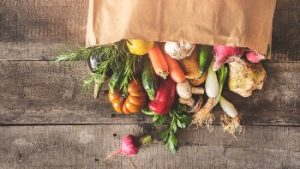
paper bag with vegetables

This is the frustrating part. You may think you’re eating a healthy diet, with lots of fruit and vegetables, perhaps so good quality meat in small amounts, nuts and seeds. Any of these healthy foods could be something you are intolerant to.

I’ll give you some examples. I am intolerant to apples. So the saying "An apple a day keeps the doctor away” apply to me! An apple a day for me means diarrhoea and intestinal cramps. I’m also intolerant to chickpeas and sesame seeds, which rules out one of may favourite snacks: vegetables with houmous (I even used to make my own…). I have clients who are intolerant to oranges (but no other citrus fruits), tomatoes, beef (yes, beef!), specific nuts like hazelnuts but not any other nut, and the list goes on.

3 - Food intolerances are not allergies, meaning they don’t give you rashes, itchiness, sneezing etc.

Intolerance reactions sit in your gut and the most common symptoms are bloating, constipation and/or diarrhoea, intestinal cramps, flatulence, fatigue and headaches/migraines.

4 - Eating a food you’re intolerant to triggers your immune system

This increases inflammation and that worsens all your Endometriosis symptoms and stimulates the growth and spread of endometrial tissue.

5 - Eating a food you’re intolerant to irritate and damages your gut wall

They worsen your leaky gut which then also increases inflammation.

Common food intolerances for women with Endometriosis are gluten and diary intolerance and removing these from your diet is usually a great place to start. It can be tricky though: what can you eat instead? To help you to remove gluten and dairy successfully from your diet, but still mostly eat your normal foods, I’ve created a self-paced course: ‘Remove Gluten and Dairy from your Diet’. You can check it out here: https://theendometriosisnutritionist.online/course/remove-gluten-and-dairy-from-your-diet/


The advanced guide to managing Endometriosis pain

Pain is one of the most common Endometriosis symptoms. Not all of my clients experience pain, and for those that do experience it, it is not always the most problematic symptom.

But for many women with Endometriosis it is pain that dictates their life. That causes them to miss events with friends and family; take time off from work; or cancel holidays.

There are different types of pain

Not all Endometriosis pain is the same. You can have acute pain, for example when you try to go to toilet and the bowel movement causes pain that disappears when you are done. You can also have chronic pain, for example chronic pelvic pain.

The location of pain can also be different. You may feel your pain in areas where you have endometriosis, although this doesn’t have to be the case. Some of the more common locations for pain are in your pelvic area, or on your bowel. But you can also have pain in your back, in your legs or when you breathe.

And the sensation of the pain, how it feels, can be different. Some possible ways to describe pain are stabbing, throbbing, cutting, tearing, burning, radiating, cramping, shooting, sharp or dull.

The potential causes of Endometriosis pain

There are a number of causes for Endometriosis pain, and you may have one or more of these underpinning your pain.

  • A major cause for pain is lesions or endometriosis tissue on organs and tissues, interfering with the functioning of that organ. For example, if you have Endometriosis on your bowel it can interfere with the bowel’s peristaltic movements, causing pain. Or if you have Endometriosis on the outside of your uterus, you can feel pain when your uterus contracts during your period.
  • Your Endometriosis may cause adhesions, where parts of an organ or tissue is stuck to something else.
  • Scar tissue, either because you’ve had surgery to remove Endometriosis, or where Endometriosis has been on an organ or tissue.
  • Chronic inflammation underpins your Endometriosis, and this inflammation also affects the nerve endings that detect damage and send pain signals to the brain.
  • Nerves have a pain memory, which means that even if there is no longer an objective cause for your pain, the nerves may still send pain messages to your brain.
  • Apprehension and anticipation of pain can also increase the pain sensation. If you expect pain, you’re likely to tense up which may worsen it.
  • Your emotional state can also affect how you experience your Endometriosis pain. If you feel relaxed or happy, it may feel less intense than when you are stressed or worried.


Strategies for reducing your Endometriosis pain

Unfortunately, pain is one of the more difficult symptoms to get on top of with nutrition. This doesn’t mean you won’t see an improvement when you start eating differently, but it will take longer to achieve a big change and the change will be more gradual.

The main strategies for reducing your pain are:

  1. Reduce your chronic inflammation. I always start the process by working out what foods a client is intolerant to. We then remove those foods as well as known inflammatory foods such as alcohol, sugar, caffeine, and processed foods from the diet.
  2. There is a supplement that can help you reduce your pain faster. It’s called palmitoylethanolamide (or PEA), which is not a pain killer, but a powerful anti-inflammatory that is able to heal the nerves. If you’d like to learn more about PEA, here is an article I wrote about it.
  3. See a physiotherapist, in particular a pelvic physiotherapist, to teach you techniques and exercises that help to reduce your Endometriosis pain.
  4. Meditation is a very powerful tool to manage pain. In my podcast “The Endometriosis Nutritionist Podcast” I interview Sam Murray a meditation teacher, who has Endometriosis herself and uses meditation to manage her pain. If you’d like to find out more, listen to Episode 14.

If pain is a key Endometriosis symptom for you that is holding you back from participating fully in life, nutrition and changing your diet can definitely help you get your life back.

If you are at all concerned about your Endometriosis and your pain and would like to find out what your options are for managing both, why not book a free 30-minute Endometriosis SOS Call: https://theendometriosisnutritionist.online/endometriosis-sos-call/. In a video call we can discuss your Endometriosis journey and what you are hoping to achieve through nutrition. I will share with you what I do and how I work, so you can decide whether that is the right approach for you.

7 Things most people don’t know about bloating

Bloating, or sometimes referred to as Endo belly, is one of the most common Endometriosis symptoms I see in my clinic. It is uncomfortable, painful at times, and can make you look like you’re 4 months pregnant (which can expose you to well-meaning, but difficult to deal with comments from people congratulating you on your pregnancy).

So why is bloating such a common symptom? What is causing it? And is there something you can do about it?

Here are 7 things most people don’t know about bloating.

1.      What is bloating?

When you are bloated, the organs of the gut are stretched due to gas, liquid or solids in the gut. This is caused by the content in your gut moving too slowly through. Another reason you might feel bloated is that your diaphragm muscles contract, basically ‘squashing’ your organs (think about a blown-up balloon that you twist in the middle: it makes the 2 parts of the balloon larger and the skin much tighter. Your diaphragm muscles can contract when you are under stress or when you’re in pain.

2.      Where can you feel bloated?

There are 2 ‘types’ of bloating. You can be bloated in your upper abdomen which is caused by indigestion. Most of you will experience your bloating in your lower abdomen, which is caused by gut issues and hormones.

3.      One of the main causes of bloating is food intolerances.

You can be intolerant to all sorts of normally considered healthy foods. For example, I am intolerant to apples! I have clients who are intolerant to mushrooms and corn (both fairly common intolerances), and even to oranges and beef. When you eat foods that you are intolerant to, your gut gets irritated, which can create gas and constipation. I wrote a more detailed post about the gut: Why you should spend more time thinking about your gut. You can read it here.

4.      Your gut microbiome is out of balance

We know that women with Endometriosis have dysbiosis, or an imbalance in their gut microbiome. Simply put, you’ve got too many bad bacteria and not enough good bacteria. Bad bacteria use sugars and simple carbohydrates as food. They ferment these in your gut and this process produces gasses. The gasses produced by bad bacteria are more noxious and irritate your gut.

5.      The role of stress

Yes, stress contributes to bloating! Our gut and brain are connected via vagus nerve and the brain sends messages down. When stressed, the brain signals that digestion needs to slow down so all energy can go into the fight or flight response. A slower digestion creates a ‘traffic jam’ like situation in your gut.

6.      The role of your hormones

Bloating can occur more before your period in the 2 weeks leading up to your period. Higher levels of oestrogen cause you to retain more water. Higher levels of progesterone make your gut more sluggish, causing your digestive system to slow down.

7.      You can do something about your bloating

Bloating is one of the symptoms you can see a big improvement on when you change your diet. This is the good news! Start by removing gluten and dairy from your diet: it is very likely that you are intolerant to both. Occasionally I have a client who is not intolerant to gluten, but the majority are. And I have yet to see a client who is okay with dairy.

Then focus on your microbiome: remove all processed foods and sugar containing foods from your diet. This will start to starve the colonies of bad bacteria. Also gently start to increase the amount of fibre (fresh fruit and vegetables, non-wheat wholegrains, beans, lentils) to feed the good bacteria and grow their colonies. Be sure to do this gently, because if your gut is not used to a high-fibre diet, you will experience lots of cramping and flatulence.


If you would like to find out how much of your diet may be contributing to bloating and other Endometriosis symptoms, I have a free diet assessment tool for you. You can take the diet assessment here.


7 Do’s and don’ts for healing your leaky gut

Healing your leaky gut is a key strategy in managing your Endometriosis symptoms.

Because you have a disease that is mostly associated with your reproductive system, you may not have spent a lot of time considering how your gut is causing or affecting your symptoms. In my previous blog post I explained why you should spend time thinking about your gut (if you missed it, you can read the article here).

So, if your gut plays a big role in your Endometriosis symptoms, and this thing called ‘leaky gut’ is a involved, what can you do to try and heal your gut?

Well, I recommend 3 do’s, and 4 don’ts for healing your leaky gut.

Do’s for healing your leaky gut

Do: Assume you have leaky gut

You don’t need to be diagnosed with leaky gut to treat your gut-related symptoms as indicators of it. If you suffer from bloating, constipation and/or diarrhoea, flatulence or nausea/vomiting, assume you have leaky gut! Because the ways to heal a leaky gut will directly improve these symptoms.

Do: Remove gluten and dairy

Leaky gut is mostly caused by food intolerances and gluten (in wheat) and dairy protein are the most commonly experienced intolerances. On occasion, I see a client who does not test intolerant to gluten, and I’ve yet to come across someone who doesn’t have a problem with dairy.

I strongly recommend you start with a gluten-free, dairy-free diet and see how your gut reacts. Most times, bloating disappears, sometimes overnight! Fatigue and brain fog are also two symptoms that can improve very quickly.

Do: Find out what your food intolerances are and remove those foods from your diet

Although removing gluten and dairy from your diet can give you enormous improvements in your symptoms, you’re very likely to have more food intolerances. And as long as you still eat those foods, your leaky gut will not have a chance to heal. This means you’re still not absorbing all nutrients from your food; there won’t be enough space in your gut for your microbiome; and the gut mucous layer will not repair.


Don’ts for healing your leaky gut

Don’t: Drink alcohol

Alcohol irritates the gut wall which creates damage to an already irritated, inflamed wall. It also has a ‘drying’ effect, reducing the mucous layer in your gut. This mucous layer is crucial in protecting your gut and helping with digestion.

Don’t: Drink caffeine

Coffee, black tea, and green tea contain caffeine. Caffeine can worsen your leaky gut by irritating the gut wall. It is also a known dehydrator, which means it dries out the mucous layer in your gut.

Don’t: Assume too quickly your gut is healed

When you start to change what you eat and drink and healing your leaky gut, you could see an improvement in your symptoms quite quickly. That could lead you to believe that your gut has healed and that you don’t have to worry about it anymore.

Unfortunately, it takes time for your gut to heal, and the absence of symptoms does not mean it’s all fixed.

I recommend you give it at least 4 months before you assume your gut is healed. And even then, you could still have food intolerances that, if you reintroduce foods, might damage your gut again.


If you are at all concerned about your Endometriosis and your gut health and would like to find out what your options are for managing both, why not book a free 30-minute Endometriosis SOS Call: https://theendometriosisnutritionist.online/endometriosis-sos-call/.


Why you should spend more time thinking about your gut

The state of your gut is a key contributor to Endometriosis symptoms. Sounds weird, doesn’t it? How can it be that an organ that is not even connected to your reproductive system causes symptoms that have to do with your menstrual cycle?

Your gut, and in particular its wall, plays a key role in many body processes, including:

  • Digestion of food: your stomach and intestines work very hard to break down the food you eat into a format that your body can use. They need to break that lovely piece of steak you had for dinner into the smallest units possible: proteins, vitamins, and minerals. They do this using enzymes, bile, and gut bacteria
  • Nutrient absorption: once your food has been broken down and digested into proteins, vitamins and minerals, they are transported through the wall in your intestines into the blood stream and taken to their next destination in your body to do their important jobs.
  • Nutrient creation: some B vitamins and vitamin K are created by gut bacteria
  • fighting off viruses and bacteria: the gut bacteria, or microbiome, also play a key role in fighting off viruses and bacteria
  • Facilitating a ‘waste disposal’ system: the intestinal wall has a layer of mucous that helps the waste move through and help to produce a nice, easy to pass, poo.

Most women with Endometriosis have leaky gut – or gut hyperpermeability.

If you have leaky gut, your intestinal wall is damaged, and is allowing undigested food particles through into your blood stream. You can compare it with a brick wall that has bricks missing in some places and mortar in others, allowing all sorts of debris coming into the house.

Those undigested food particles in your bloodstream trigger the immune system, which causes inflammation (read more about the role inflammation plays in your Endometriosis here).

A damaged gut wall also means there is less surface area through which nutrients can be absorbed, which means likely nutrient deficiencies. These nutrients may be crucial for hormone production or energy, for example.

The reduced intestinal wall surface area is also a problem for the gut bacteria  that live on that wall. There is less space for them, so your ‘army’ of defenders and vitamin producers is not big enough to keep up with everything they need to do.

And finally, when you have leaky gut, the mucous layer on the intestinal wall is damaged and there is not enough lubricant in your gut to help move the waste down towards your colon. The result is dryer, rougher poo and this contributes, or causes, constipation.

So what causes leaky gut?

The biggest culprits are processed foods and foods that you are intolerant to. Unfortunately, foods that are generally considered healthy (such as fresh fruits or vegetables) can be foods that your digestive system is not able to cope with.

Healing a leaky gut means finding out what foods you are sensitive to and removing them from your diet. This allows your gut wall to heal and your immune system to be triggered less, reducing your inflammation as a result.

Most food intolerances are unique to you, but there are some that cause problems for most women with Endometriosis. If you would like to find out if you have some of these foods in your diet, I have a free diet assessment tool for you.

You can take the diet assessment here.

Your immune system: its biggest challenge and what you can do to fix it

Your immune system is one of the key contributors to your Endometriosis. If you’ve been reading my posts for a while, you’ll know that I approach Endometriosis as an inflammatory disease, not a hormonal disease. I focus on your digestive and immune systems to reduce the severity of your symptoms.

So, what is the biggest challenge with your immune system?

Well, there are two parts to this. Firstly, it is too easily triggered, and secondly, when it is triggered, it doesn’t work very well.


Too easily triggered

Your immune system’s job is to spring into action when a foreign invader has entered the body (like a virus) or is threatening to enter the body (like bacteria around a wound).

Unfortunately, it gets triggered more than it should.

You’re likely to have food intolerances that cause leaky gut (or gut hyper-permeability), allowing undigested food particles to enter the bloodstream ... where they’re not supposed to be. This triggers an immune response.

You also have a gut microbiome that is out of balance: too many of the bad gut bacteria and not enough of the good gut bacteria. The bad bacteria produce chemicals called endotoxins which trigger the immune system.


Not very effective

When the immune system is triggered, it produces a number of immune cells to deal with the situation. And when you have Endometriosis, you’ll have a few issues there.

One of the key immune cells are pro-inflammatory cytokines, and you produce too many of them. As the name indicates, these cells create inflammation, which is at the heart of your Endometriosis and most of your symptoms.

You also produce large amounts of lymphocytes, whose role it is to determine what type of immune response is needed to deal with what triggered the immune system, but those lymphocytes are not very effective.

Your immune system also produces natural killer cells and macrophages. Natural killer cells’ job is to kill cells that have been infected by a virus. Macrophages’ role is to eliminate cells that are damaged or diseased. Your immune system produces both but they are not very effective.

And the final issue is that in women with Endometriosis auto antibodies are found. Antibodies are memory cells that store information about dangerous pathogens and the way the immune system needs respond. Auto-antibodies trigger your immune system to react against your own body’s cells and tissues. One particular type of auto-antibody here are anti-endometrial antibodies, which tell it to fight against your Endometriosis.


What can you do to fix your immune system?

The most important thing is to stop it from being triggered unnecessarily. The best way to do this is to avoid foods you’re intolerant to and to improve your microbiome.

You can also eat foods that support your immune system:

  • Lots of fresh fruits and vegetables, in particular carrots, broccoli, red capsicum, sweet potatoes, berries, avocados, mushrooms, asparagus, lentils, beans, legumes, and green leafy vegetables. Make sure that each meal consists of at least 50% plant matter and covers the colours of the rainbow.
  • Eat foods that contain the B-vitamins: beef, chicken, eggs, lamb, fish, nuts and seeds, and legumes
  • Get out into the sun to increase your vitamin D. Sunlight is the most effective way for your body to process vitamin D. Cod liver oil can also help. You can read more about the importance of Vitamin D here.


You may be wondering your Endometriosis symptoms are influenced by your immune system and diet. I’ve created a free 3-part video series that looks at how diet affects 15 Endometriosis symptoms. You can register for it here.

5 Reasons why Googling ‘healthy eating for Endometriosis’ will leave you confused

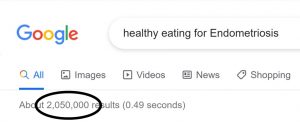
Before I started writing this article, I Googled “healthy eating for Endometriosis”. Would you like to guess how many search results that gave me? More than 2 million!

healthy eating for Endometriosis


There were book recommendations with diets and diet plans. And many webpages that tell you which food to eat and which to avoid. That was just on the first page ..

Many of the suggestions, at least on the websites I quickly clicked into, give very general healthy eating recommendations. The kind that most governments also provide for other diseases, for example heart disease. The recommendations are to avoid processed foods, eat more fruit and vegetables, avoid inflammatory foods (but the sites disagree sometimes on what is inflammatory and what isn’t), eat a wholefood, or FODMAP, or general anti-inflammatory diet.

Now, I don’t disagree with any of these. But I think there are 5 reasons why the information on Google about healthy eating for Endometriosis confuses you.


1. The recommendations are based on the writer’s view of what may be causing Endometriosis.

Some sites recommend an anti-inflammatory diet which means they see Endometriosis as an inflammatory disease. Others recommend foods to help your body to get rid of oestrogen. They work from the perspective that Endometriosis is a disease of excess oestrogen.


2. Some books or websites are written by clinics or practitioners, others by people with a lived experience.

I would hope that clinics and practitioners base their advice and recommendations on well researched, scientific information. It is great to see that Endometriosis is getting more funding for research and that nutrition is becoming a topic of interest.

Other sources of information are written by people with a lived experience, so women who have Endometriosis, have searched for and experimented with different diet approaches and found something that improved their symptoms.

What both of these have in common though is that they don’t take the individual’s relationship with food into consideration. If a research study says a gluten-free diet reduces symptoms for 75% of women, that is a fantastic insight. But do you below to the 75% that will see an improvement, or to the 25% who don’t see a benefit from a gluten-free diet?

Similarly, if one woman shares her success with a particular nutritional approach, how do you know it will have the same effect for you?


3. The majority of information only looks at Endometriosis

When you search for healthy eating for Endometriosis, the results only look at Endometriosis in most cases. But what if you also have a thyroid problem? Or asthma? I couldn’t find any search results for combinations of health concerns, except for Endometriosis and PCOS.

If you have other health concerns, the recommendations may help you to reduce your Endometriosis symptoms, but may not help your other health concerns, or even make those worse!

4. The aim of the information is to appeal to a large audience

Websites and books try to provide information to a large audience, and need to generalise (just as I have generalised about the information I’ve found in my Google search on healthy eating for Endometriosis) to make the information readable.

5. Nutrition and your health is based on biochemistry

How nutrition affects your health is based on biochemistry – how compounds and molecules from food interact with your body and body systems. Unless you have some knowledge of the biochemistry of nutrients and health, you’ll be blindly trialling things. Some may make you feel better, others don’t make a difference at all, but you have no idea why.


Here's what I know about healthy eating for your Endometriosis. There’s only one way to eat healthy and reduce your symptoms, and that is to follow your uniquely personal diet. A diet that takes all your health concerns into consideration, and is based on your unique relationship (good or bad) with food.

Can you get create that diet based on Google results? Possibly. But you’ll get much better results and a lot faster and with a lot less confusion, if you let an expert help you to create that diet.


Has Google confused you about healthy eating for Endometriosis? I can help you get some clarity about how Nutrition may help you in a free 30-minute Endometriosis SOS Call.

Inflammation: The Good, the Bad, and the Ugly

Despite what you might have heard or read, it is inflammation, not hormones, that underpin your Endometriosis symptoms and the progression of the disease. Hormones do play a role, and I’ll write a separate article about that, but they’re not the driving force.

And there is good, bad and ugly news about this inflammation.

Let’s start with the ugly (so we can end with the good, and there definitely is good news!). The ugly news is that Endometriosis is an inflammatory disease and that you have chronic, systemic inflammation. All your organs and tissues are in a constant state of inflammation. This inflammation is the ‘engine’ behind the severity of your symptoms and the progression of your disease.

So what is the bad news?

The inflammation is caused by problem with your immune system and your digestive system. When your immune system is triggered, one of the mechanisms it uses is inflammation. It produces specific pro-inflammatory cells, and unfortunately, women with Endometriosis produce an abundance of these pro-inflammatory cells. The immune system also produces cells that remove whatever pathogens or cells that triggered the immune response in the first place. And guess what? Your immune system does produce them, but they don’t function very well. So the result is this chronic, systemic inflammation.

But how is your immune system triggered? Well, that’s where your gut comes in. You very likely have leaky gut (or gut hyperpermeability), which causes undigested food particles to get through the gut wall into the blood stream. These particles are not meant to be there, and your immune system is triggered to fight these invaders.

We also know that the microbiome of women with Endometriosis is out of balance. You have too many of the bad bacteria and not enough of the good ones. The good bacteria play a very important role in moderating the immune response. And the bad bacteria produce chemicals, or endotoxins, that trigger the immune system.

And now for the good news!

There is so much you can do with nutrition to improve your gut and reduce your immune response, which then reduces inflammation.

The first focus is on healing your gut, and a key strategy is to find out what foods you are intolerant to and remove those from your diet.

The second focus is on improving your gut microbiome, to make sure you have not only a lot of good bacteria, but also a wide variety of different bacteria.

Keep an eye on the next few blog articles. I will go into more detail about your immune system and will also take a closer look at leaky gut.


Are you wondering if your diet contains foods and drinks that increase your inflammation? I have a free report for you “5 Things you Eat and Drink that Make your Endometriosis Symptoms Worse”. You can download it here: https://www.subscribepage.com/5thingsyoueatanddrink

How to use meal planning when changing your diet

Meal planning is crucial to make sure you are prepared AND have the necessary ingredients to make meals that are right for you.

One of the main challenges you'll have to deal with when changing your diet is that you're fighting your routines.

And if you rely on being able to whip up a meal that suits your new anti-inflammatory diet on the spot, you might find you just don't have the ingredients you need. So you'll fall back on tried and trusted, but inflammatory, meals.

I use 3 meal planning strategies:

STRATEGY 1: CONSIDER YOUR WEEK AHEAD

Choose which meals you're going to make and when you'll make them based on what your week ahead will look like.

If your week is looking crazy busy, go for meals you can make ahead, or that are on the table in 10 minutes.

If you're in and out, and won't have time to take a breath, let alone sit down for a meal, include meals you can eat 'on the run'.

And if you have a week with time to cook, consider cooking extra portions to freeze, so you'll have meals for when times are crazy. I only cook dinner 3 times a week: Saturday, Sunday (well, technically my daughter cooks on Sundays), and Mondays. On these days we cook double portions, that we then eat on Tuesday, Wednesdays and Thursdays. Fridays are our 'we can't be bothered' dinner days.

STRATEGY 2: MAKE A LIST OF YOUR FAVOURITE MEALS.

Endometriosis diet

Make a shopping list


Meal planning becomes really easy if you have a quick way of selecting meals. If you have some tried-and-tested favs, that you know you can make easily and you (and others) will enjoy, write them on a list.

You could even create a set of cards with meals for breakfast, lunch and dinner. If you add the ingredients to the card, you'll have a handy tool to make your shopping list as well.

Of course, an electronic version would work as well.

Having a list will make the selection process very quick. So take 5 minutes to make a list of meals to choose from.

STRATEGY 3: SHOP FOR YOUR ENTIRE MEAL PLAN

This may be obvious, after the previous 2 strategies, but when I started meal planning, I thought having a plan was enough. I still thought buying the ingredients every other day or so was going to work. But life gets in the way! And I found that if I have the ingredients for a planned meal, I'm more likely to make it. If I need to go get the ingredients I'm finding it much harder to stick to my meal plan.

And when you're planning your meals, and more specifically, when your 'week' starts, think about when the best day for grocery shopping would be.

When I started with meal planning for myself, I didn't work on Fridays. With my daughter still in school, and Saturdays typically crazy busy in the shops, it gave me a more relaxed and fast shop.

Now I do my shopping on Saturday morning, and the meal planning is done on Friday evening.


Don't underestimate how hard it is to change your diet! I usually 'joke' to my clients that the hard part of changing your diet is ... changing your diet. Knowing what to eat and what not to eat is not enough. You need to take the 'thinking' out of the daily equation and a weekly meal plan is the perfect strategy to do that.


If you would like to experience the power of meal planning, without doing the planning yourself, try my 2-Week Meal Plan. It tells you what to eat and provides all the recipes as well. You can purchase it here: 2-Week Meal Plan